
At ANDX, I led end-to-end design across product, brand, and growth, while also supporting research, GTM, marketing, and front-end execution.
Case Study: Creating an AI-native trading platform that makes complex trading accessible to users of all experience levels while standing out in a crowded market.
MY ROLE
Product Designer
Front-End Developer
TEAM
App & back-end web developers
Marketing strategist
TOOLS USED

Framer

Figma

Claude




CONTEXT
ANDX is a unified platform for crypto and real-world assets, spanning global altcoins, tokenized real estate, and seamless fund movement. When I joined, the exchange was a complex white-label product inherited through an acquisition, built around the assumption that users already understood crypto and trading, with little research into who the target audience was or what they needed. This case study focuses on a 6-month sprint to redefine that experience and prepare a differentiated, AI-led exchange for beta launch.
MY CONTRIBUTION
My challenge was to make trading approachable for novices through guided learning and AI assistance, while still creating enough depth and differentiation to attract experienced traders in a crowded market. I focused on making the product feel more intuitive, trustworthy, and less like the high-risk, gambling-like experiences common in crypto, while building long-term engagement. Alongside the exchange, I defined the target user, shaped the product and GTM strategy, and established ANDX’s brand and online presence.
THE PROBLEM

Barriers to Entry & Growth
Existing trading platforms assume prior finance knowledge, and do little to provide a learning curve.

High Friction Costs
~10% lost just to move your own money. $100K+ minimums for top-tier investment products

RESEARCH
Understanding the user & validating demand
I collaborated with our marketing strategist to get a better understanding of who our users are. Our white label solution had initially been designed for a Turkish audience, and was not very transferrable to the American audience we were now designing for.
13 User Interviews
We interviewed 13 participants across two core user groups: seven fee-sensitive, active traders and six curious, less-experienced college-age crypto users. These groups reflected the two audiences we believed the product needed to serve—experienced traders looking for value and efficiency, and newer users facing greater barriers to entry.
Secondary Research
We also conducted secondary research across Reddit communities and other online discussions to understand how people talked about their crypto experiences and the platforms they currently used. This helped validate many of the themes uncovered in our interviews while surfacing additional pain points, behaviors, and unmet needs.

OUR USERS
Learnings: Identifying our end user
Lead ICP: The Confident Self-Manager
Financially literate, active investor who takes a research-driven approach to crypto. They manage diversified portfolios independently, prioritize credibility and long-term growth over speculation, and are open to AI tools that support, not replace, their judgment.
Key needs:
Low, transparent fees & reliable transfers
Clean, trustworthy UX
Unified portfolio visibility
Credible market insights
Strong security and regulatory trust
AI support without loss of autonomy
Challenger ICP: The Curious Beginner
Self-motivated novice eager to learn crypto and trading, but intimidated by platforms built for experienced users. They learn through social content, online communities, and experimentation, and want a simple, guided experience that builds confidence.
Key needs:
Simple, intuitive UX
Clear onboarding and progress education
AI guidance and explanations
Low-risk ways to get started
Easy deposits and transfers
Real-time context and alerts
COMPETITIVE ANALYSIS

CORE PRODUCT


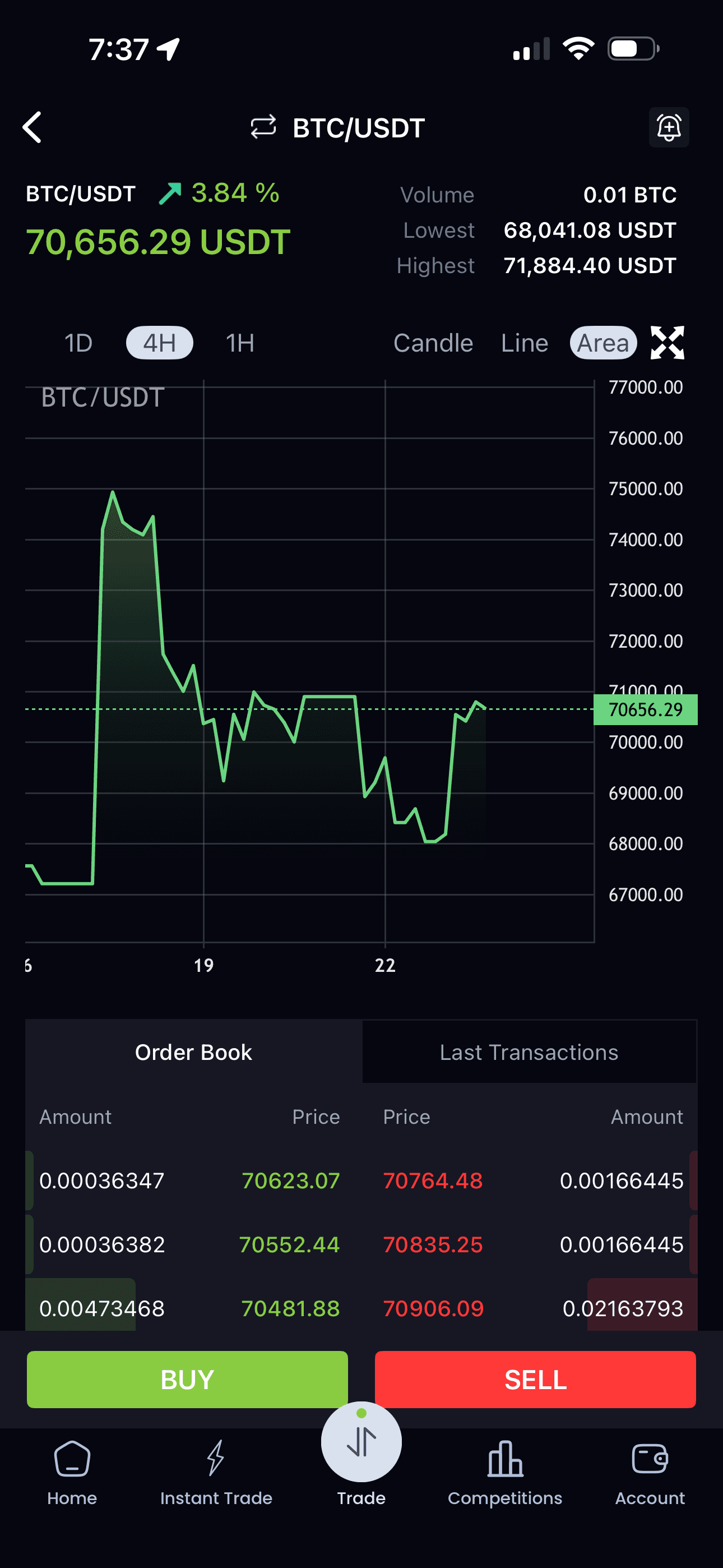

Designed as a true cross-platform trading experience, built for web, iOS, and Android—not simply adapted from one screen size to another.
The product needed to work across very different contexts, so I reimagined the experience for each platform while preserving the core functionality required by our initial white-label solution. Mobile focused on speed, clarity, and simplified trading flows, while the web app evolved into a more expansive dashboard experience with greater information density, portfolio visibility, and advanced trading tools.


AI ANALYTICS
Building AI into the experience that educates & advises
I worked closely with our back-end developer to create an AI agent that lived directly within the product, providing personalized trading support, lookback analysis, and intelligent guardrails. By learning from user behavior, the agent could tailor guidance to individual journeys, encourage more disciplined decision-making, and help users better understand their own trading patterns.


Analytics Engine
Beyond the in-app support agent, we built a deeper analytics engine using Sphinx.ai to serve both novice and experienced traders. For advanced users, it could analyze complex portfolios and surface meaningful insights; for beginners, it could answer much simpler questions like, “What should I trade?”.
I also created guided videos such as this one on the right to teach users how to use the engine.

ONLINE PRESENCE


MARKETING & RETENTION
Driving user growth & retention through targeted campaigns
We focused on driving measurable acquisition and retention through targeted Meta campaigns and in-app incentives, including trading competitions and referral programs. These efforts improved user conversion, increased 30-day retention, and drove a meaningful lift in transaction volume, establishing a scalable growth engine.


IMPACT


Next Steps
Following the beta launch and additional funding, we moved away from the white-label foundation and rebuilt the trading platform from the ground up. This gave me far more control over the product experience and opened up new opportunities to refine flows, improve usability, and respond to feedback from early user testing. At the same time, the product expanded beyond trading into a broader ecosystem that included ANDX Pay, our payments product, and a tokenization service designed for institutional clients. We also expanded past the U.S into other countries.
Reflections
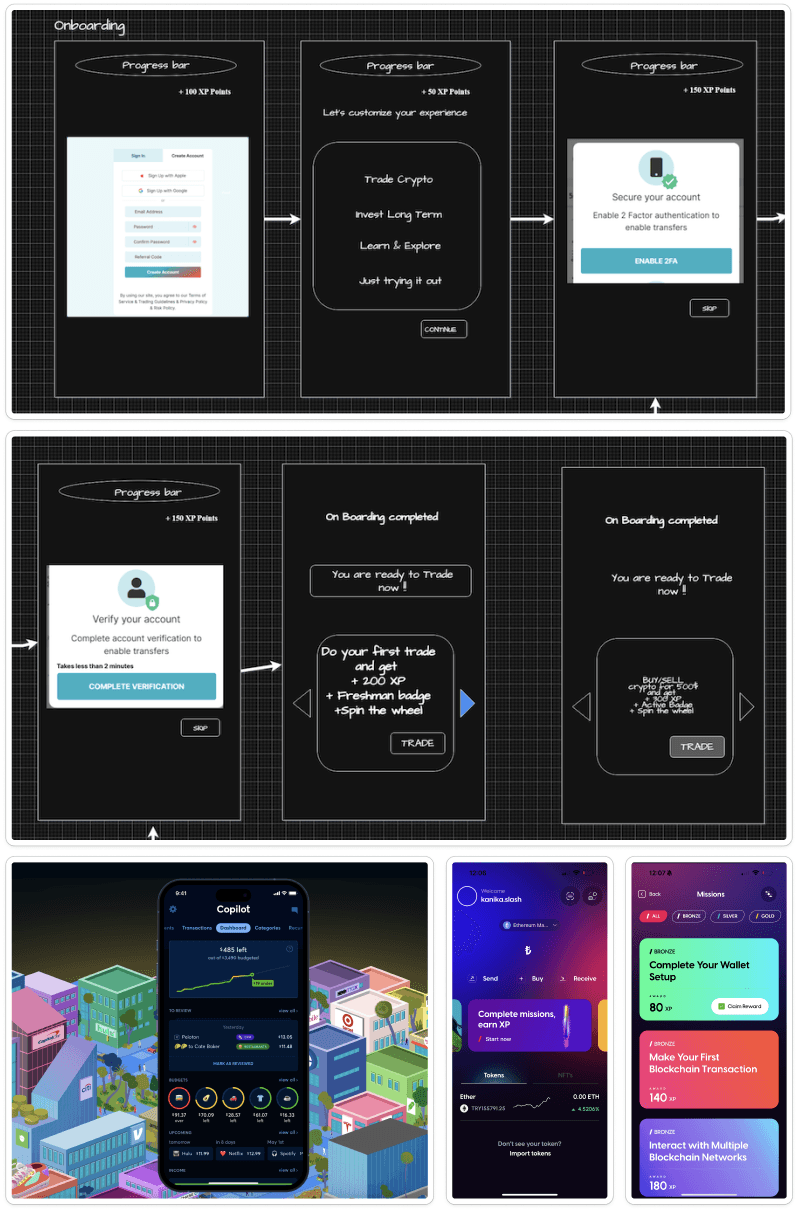
A key learning was balancing the needs of novice and experienced traders within the same product. I initially assumed advanced users would prefer more complexity, but feedback showed they valued simplicity too. They wanted a clean experience with deeper tools available when needed. Looking back, I would have paired our AI-assisted education with a more structured, milestone-based onboarding flow to better guide new users through key actions, reduce uncertainty, and build confidence from the start. Actions like making their first trade, or checking out the support bot.